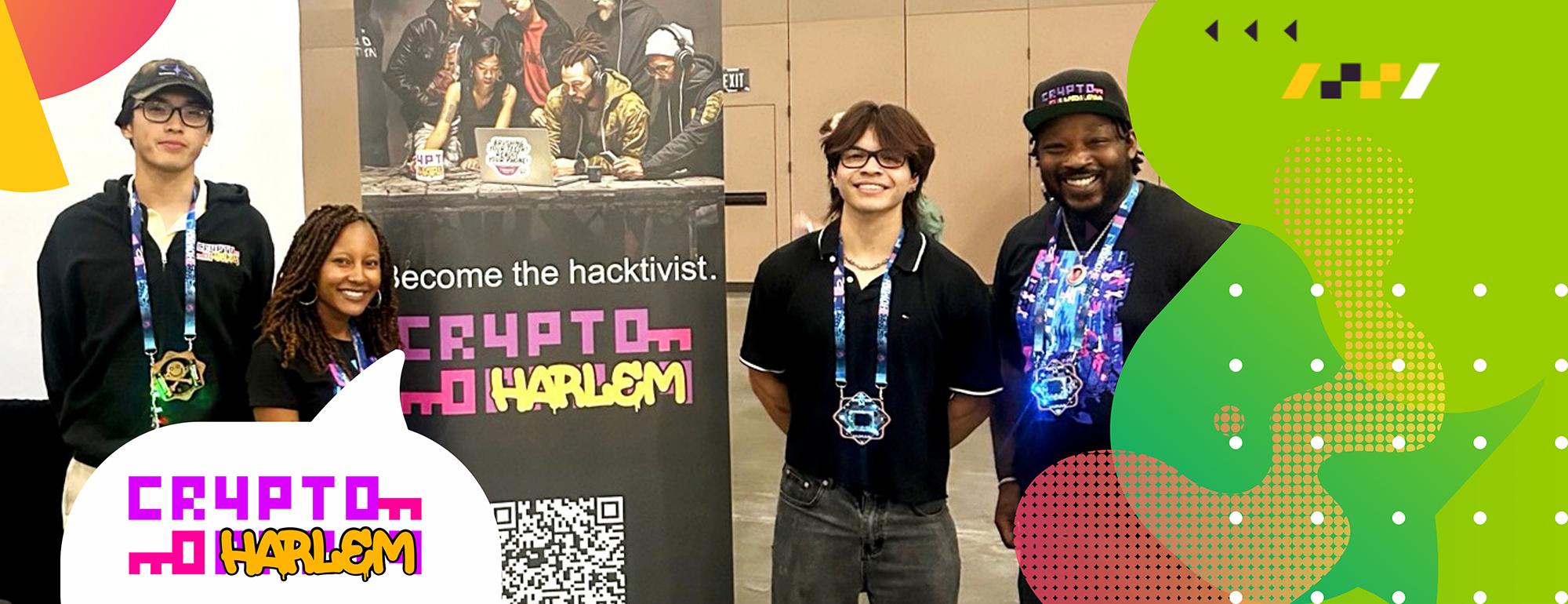
Team CommUNITY: protecting and mobilizing communities most at risk

Sepal Grantee Spotlight: Team CommUNITY

Digital Rights is an emerging field and community of practice confronting the most pressing technological challenges impacting human rights and social justice in this era — from online surveillance and censorship, to disinformation and the growing societal impacts of artificial intelligence — all of which have profound implications for people and communities worldwide.

The digital rights field has been rapidly shrinking due to burnout, historic funding cuts, and direct attacks from adversaries meant to destabilize the field. This is further exacerbated by the steep onboarding knowledge required to enter the field, as it demands cultivating expertise in technology and security. Combined, this is directly resulting in less security and safety resources and support for civil society, journalists, and defenders across all regions, and less people mobilized effectively to confront these new technological, digital rights challenges.

Team CommUNITY confronts these challenges by devoting themselves to organizing and creating community spaces and capacity-building initiatives designed to grow, mobilize, and create solidarity between digital rights networks and at-risk communities around the world. Their community reflects this mission — represents more than 120 countries with 51% of community members living in the Global Majority and 54% identifying as women or gender non-conforming.

By organizing their annual Global Gathering and virtual safe community spaces, keeping the digital rights community up-to-date through a weekly newsletter, growing networks through their popular Job Board, providing educational and leadership development opportunities, and building diverse resources for beginners, such as their wiki-based Knowledge Center, this team provides a wide spectrum of support from networking and mentorship, to the creation of standard-setting safety and security tools and protocols for events and community spaces.

We had an opportunity to ask Team CommUNITY a set of questions about their work what drives them. Take a deep dive into their philosophy in the following paragraphs features their answers.

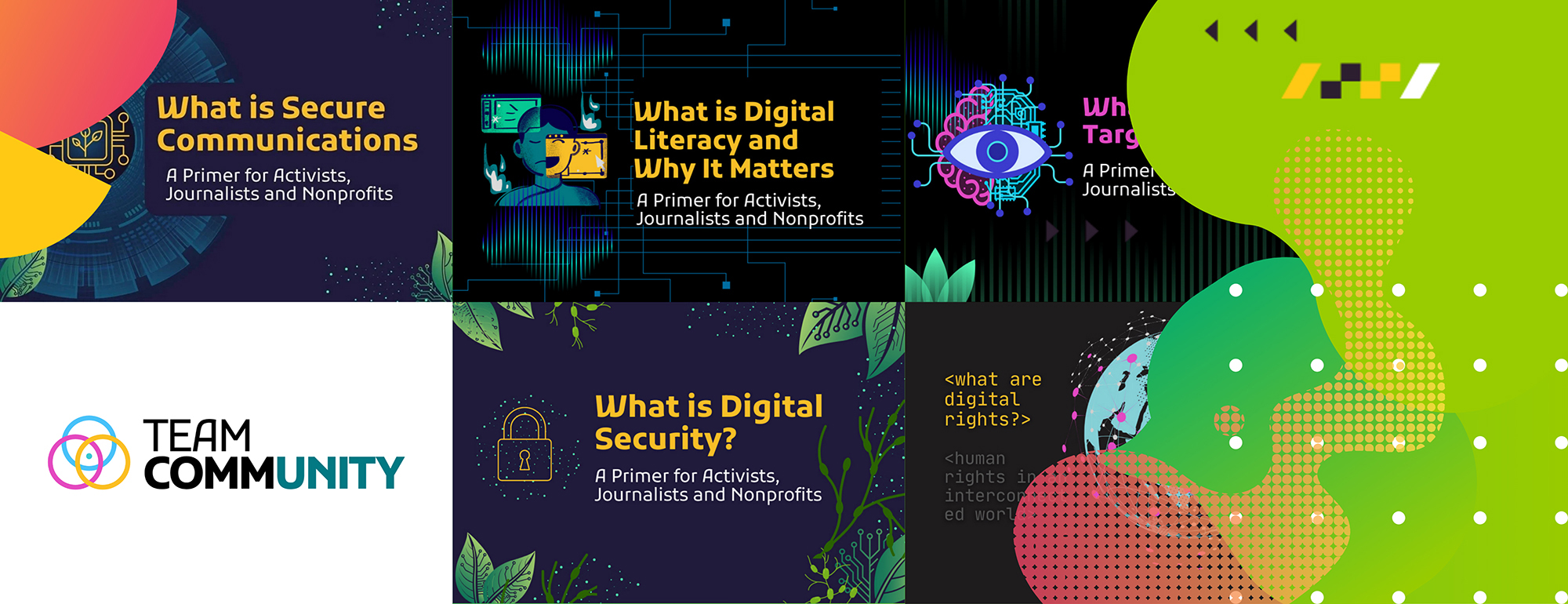
We highly recommend that you join this community by signing up to their newsletter and read their community resources. They also has an awesome series of blog posts featuring members of their global community, and introductory primers on important digital rights and security topics impacting civil society.

What first drew you to this work?

Many in our team became interested in this work because of our family history or our personal experience.

Who do you hope benefits most from your work? Who is at the heart of the impact of your work?

Folks experiencing the most acute forms of digital repression, which tend to be from communities and networks that are vulnerable, excluded, or marginalized, and at-risk journalists and media workers. Additionally, the projects supporting these communities’ security and safety needs, or are advocating for their digital rights

What does a genuinely privacy-respecting or ethical technology ecosystem actually require — beyond good intentions?

Currently, the digital rights field is incredibly fragile because of historic funding cuts, so unfortunately, there is need in all areas — foundational critical projects are closing, existing support is crumbling, digital rights defenders are burning out or facing precarious labor contexts, and adversaries are pumping billions of dollars in honing in their strategies, tools, and capacity. While each region and at-risk community has different priorities, more funding is needed to stabilize this critical work. Without it, we will continue to see the shrinking of civil society spaces across all regions, including the Global North.

To get this support, we also need the general public to grasp the depth of how democracy, freedom of expression, journalism, human rights, and social justice are being dangerously impacted by these technological harms, particular in this moment in history, and why protecting digital rights are important.

Can you name one misconception people often have about digital security, privacy, or technological ethics?

These terms unfortunately can't be explained in a 30 second media bite, which makes our storytelling in the digital rights space challenging. This also means it is harder to mobilize mass population(s) to protect digital rights values and stop the numerous censorship, surveillance, and nefarious technological mechanisms being implemented across the globe, while also ensuring defenders and journalists have the security and safety they need to protect themselves from direct attacks designed to silence them.

What tensions or contradictions do you wrestle with in building and developing your work?

Security and safety of community spaces requires investment, infrastructure, and expertise. Additionally, the most at-risk communities need tremendous support to overcome the steep barriers they face to enter the digital rights field and acquire the security knowledge they need to protect themselves and advocate for their digital rights.

Navigating this during a period where adversaries are rapidly sophisticating offensive strategies and tools they use, while the digital rights community is navigating historic funding cuts, means growing the community must be done at a slower pace than what is needed by civil society worldwide.

What feels particularly urgent right now?

To stabilize the digital rights community of practice so that knowledge, projects, and critical projects are not lost forever.

What keeps you motivated despite the challenges of this work?

The survival and protection of our communities means there is no other option than to continue forward. The battles we are currently fighting impacts not just us, but all future generations.

What is something people rarely see or understand about the labor behind this kind of work?

There is a lot of emotional labor behind the scenes that has real impact on the people doing the work. For example, we have noticed that many people develop auto-immune diseases as a result of the stress of the work. This impacts primarily women and individuals from marginalized communities. However, there are few resource to help these folks, let alone stable work that provides health benefits.

What is one digital habit or practice you think more people could benefit from when adopted?

Thinking twice before posting data in any type of digital space — whether in text, a social media post, or documents. We underestimate how our data can be used against us.

What gives you hope about the future of technology, digital security, and/or privacy?

People's resilience. Community networks. Solidarity across borders.

What advice would you give to someone newly entering this field?

First, find ways to ensure that the skills you are developing in digital rights field can be easily translated to other fields. Employment in digital rights continues to be precarious, and your long-term well-being matters. You need to put your mask on first before you start helping others.

Secondly, the body of knowledge may seem overwhelming — developing a security mindset takes time — but it becomes second nature eventually. The digital rights community has some of the most amazing, brilliant, and good-hearted people who would love to give you support!

2026-08-20

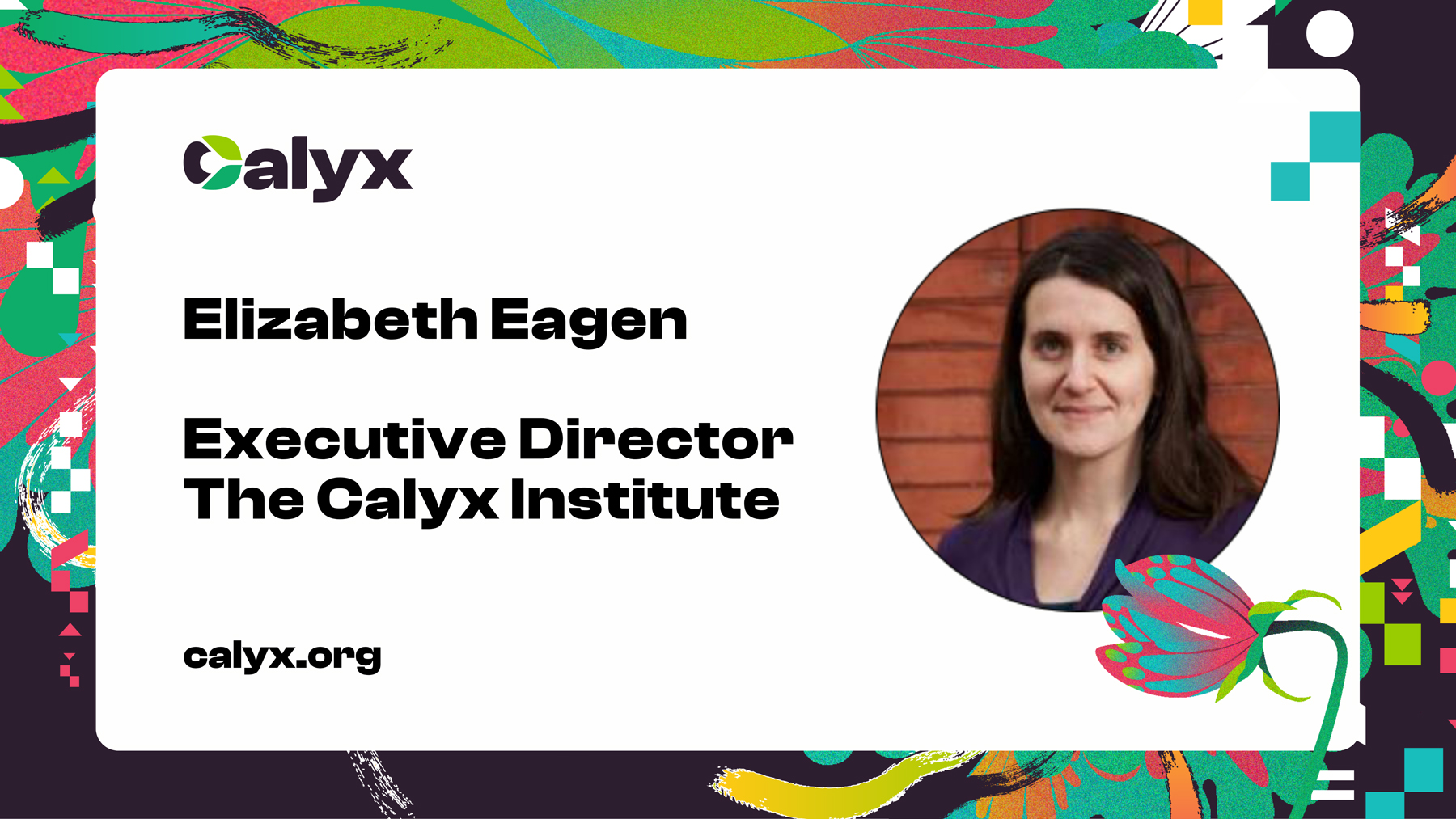
Introducing the Calyx Institute’s new Executive Director: Elizabeth Eagen

The Calyx Institute is thrilled to announce that Elizabeth Eagen will be joining us as our new Executive Director. Elizabeth is a long-time advocate for internet freedom, and we at Calyx are eager to discover how her insights and leadership will guide and shape Calyx as we continue to thrive.

Before joining Calyx, Elizabeth served as the deputy director at Cornell University’s Citizens and Technology Lab, where she designed and led projects examining the impact of emerging technologies (such as generative AI) on public policy, digital privacy and security, and human rights.

Elizabeth’s philanthropic work has focused on projects designed to protect people and their data in this fast-evolving digital age. Her expertise ranges from research advocacy to the digitization of governance via technologies such as digital identity systems. She has also helped multimillion-dollar institutions create and implement responsible strategies around technology, privacy rights, and personal data.

Calyx exists to defend digital privacy and advance connectivity. Our work has always been driven by our vision for a future where everyone has access to the resources and tools they need to remain securely connected. The global fever around AI technologies, rampant data harvesting in digital services and programs, and tech giants’ gatekeeping of free and open-source software (FOSS) projects has only made our mission more crucial, and we are excited to welcome a leader with deep expertise about the interconnectedness of technology, human rights, and society.

Elizabeth has spent more than two decades studying how emerging technologies shape public policy and how those technologies are leveraged by those in power to harm vulnerable communities across the globe, including as the leader of the Emerging Technology portfolio at the Open Society Foundations’ Information Program, and on the advisory council of the Open Technology Fund. She has also devoted herself to supporting those communities through fundraising and advocacy. In this as in so many other aspects of her work, she and Calyx are aligned.

We welcome her vision for a seamless programmatic strategy that will augment Calyx’s impact on the FOSS ecosystem, our internet membership program, and our expanding funding and education efforts.

As we step into this next phase of Calyx’s growth, we welcome community input to help us define our priorities. Please share your thoughts with us via our help desk, our social media, or the CalyxOS community channels.

2026-08-03

Abya Yala Network: enabling community-owned internet infrastructure across Americas

As information and communications technology has become instrumental in societal development and transformation, a handful of big tech companies have gained surging power through platformisation, making themselves even more influential than most nation states. Modern computer systems are dominated by underlying social, organisational, and technical mechanisms driven by big tech carefully obscured to fortify structural discrimination. In places where people have no other choices than to depend on such systems, it can mean the literal difference between life and death, especially in the periphery of the U.S. empire.

The Abya Yala Network (Red Abya Yala) was born to help communities break free from big tech and gain their data sovereignty by building capacity for people to be their own (and each other's) system administrators. Formed as a coalition by group effort, The Abya Yala Network provides tooling, training, and community support for activists to use open-source, self- or community-hosted applications for their work. Primarily focused on communities doing environmental and human rights monitoring, The Abya Yala Network has also formed a free, independent media based on participatory assemblies.

Indigenous peoples, rural communities, migrants, grassroots organisations, and environmental defenders are often systematically marginalised, isolated, and blocked from meaningful access to digital spaces and communication infrastructure. Voices of these communities are frequently excluded from mainstream media, eliminated by censorship, and cut off by economic, political, and technological barriers.

The Abya Yala Network’s work is driven by an eagerness to help these peoples build community-owned infrastructure and their autonomous communication capacity with free and open-source software (FOSS) and participatory media practices. These are the communities who need the most support to have their own platform to create, manage, and share information, which can bring greater visibility to the challenges they are facing. The Abya Yala Network works directly with community members to promote digital privacy, take back control of people’s data, develop educational resources, and equip them with means to participate in decisions affecting their lives and territories.

Through email correspondence, the Abya Yala Network and their collaborator from the Co-operative Cloud shared with us the cause they are fighting for, the areas of their work, the main challenges they are facing, and their theory of change. You can take a deep dive into their work in the following excerpt. If you are inspired by the Abya Yala Network’s work and want to follow their progress, you can visit their website and follow their media Labo Popular de Medios Libres, the project they are building called Sutty (Instagram), and the open collective the Co-operative Cloud.

What first drew you to this work?

We were inspired to action by seeing the continued dismantling of the liberatory potential of the first age of the internet. We have observed the growth of surveillance capitalism, the increasing centralisation from a plurality of unique publishing platforms to a few heavily-censored oligarch-controlled apps, and the various methods of closing off access for the public to understand and customise the technology we are increasingly compelled to use to participate in the everyday life. Meanwhile, there exists wide availability of high-quality open-source software and a growing surplus of artificially-obsolete hardware.

We see the potential for grassroots resistance to build spaces characterised by interoperability, autonomy, and accessibility. This future could go beyond offering "Google but free" or "Microsoft but Latin American" to platforms that are at most aesthetic facsimiles to their corporate counterpart, leading to profoundly different political results.

What are you currently building, researching, organising, or experimenting with?

Escuela Común, our educational initiative that offers open-source tooling and training through workshops and events, recently completed its second cohort, with representatives from across Latin America gathering in Buenos Aires for the final, in-person portion of the school.

Over the past few years, we have developed and refined a growing collection of deployment “recipes” that automate the installation and management of digital platforms using FOSS. These tools can significantly lower the barriers to adopting community-owned infrastructure.

As we begin preparing for next year, our priorities are:

  1. Solidifying our VPN proxy system, which helps make it easier to host applications in restrictive network conditions and in the face of state and corporate repression.
  2. Selecting new open-source platforms to package as Co-op Cloud "recipes" to recommend to participants in our past and future cohorts.
  3. Improving the Co-op Cloud command-line tool "abra" with bug-fixes and UI enhancements identified in the past year's teaching.
  4. Further developing our pedagogical system for teaching in Latin America and beyond.
  5. Growing our network of distributed data storage for backups and media.

What does a genuinely privacy-respecting or ethical technology ecosystem actually require — beyond good intentions?

What remains missing is the investment in people. Organisations and communities need opportunities to develop skills, confidence, and long-term capacity to manage their own digital infrastructure. Too often, technology projects focus on deploying platforms rather than building local knowledge.

A genuinely privacy-respecting and ethical technology ecosystem does not primarily require new technologies. In many cases, the tools already exist. FOSS has made secure communications, self-hosted services, and community-owned infrastructure more accessible and affordable than ever before. Hardware costs have decreased, and deploying digital infrastructure has become significantly easier.

Privacy, security, and digital sovereignty are not achieved simply by installing software. They require people within organisations who can manage systems, make informed decisions, and adapt technologies to local needs. The most important challenge is creating sustainable pathways for communities to become active stewards of their own infrastructure, data, and communications.

Can you name one misconception people often have about digital security, privacy, or technological ethics?

One misconception we often encounter is the belief that digital security is primarily a technical problem that can be solved by choosing the “right” tool, encryption method, or platform. While technology matters, trust, governance, and relationships are often just as important.

We frequently remind people that the key question is not only how information is protected, but also who controls the infrastructure and under what incentives. A platform may use strong encryption and excellent security practices, but ownership, governance, and business models can change over time. Communities should understand who is hosting their data, who can access it, and what interests influence those decisions.

Another common misconception is that perfect security is possible. In reality, nothing is completely secure on the internet. Security is about reducing risks, building trust, and making informed choices. For us, technological ethics begin with people, relationships, and accountability — not only with technical features.

What tensions or contradictions do you wrestle with in building and developing your work?

One of the tensions we constantly wrestle with is the desire to make digital infrastructure easier and more accessible for communities while recognising that technology is not always their most urgent need.

Much of our work focuses on developing tools, training materials, and deployment processes that help communities adopt and manage their own digital platforms. However, there is always a risk of putting the solution before the problem. Meaningful technology can only emerge from ongoing relationships with them. When we spend too much time behind a computer designing tools, we can lose sight of the realities, priorities, and challenges that communities face in their daily lives.

We need to work directly with communities to understand their current challenges, identify which tools are most useful in their contexts, and co-develop new deployment recipes that respond to real needs rather than assumptions.

Equally important is training people to use, adapt, and maintain these tools themselves. Building local capacity is essential for long-term sustainability. Dialogues, in-person gatherings, and long-term community engagements help ensure communities remain active participants in shaping the tools they use. By expanding training and community engagement, we can strengthen the international network of users that already exists and create stronger pathways for knowledge-sharing, collaboration, and digital autonomy.

What keeps you motivated despite the challenges of this work?

People we meet along the way keeps us motivated. Through this work, we have the opportunity to collaborate with remarkable communities, organisers, technologists, educators, and environmental defenders who continue to create alternatives despite significant challenges. These relationships remind us that technology is ultimately about people, not platforms.

We are also motivated by the success stories that emerge over time. Seeing a community deploy and manage its own infrastructure, an organisation gain greater control over its communications, or participants go on to train others demonstrates that meaningful change is possible. Some of the most rewarding moments happen years after an initial training or collaboration, when people share how they adapted a tool, solved a problem independently, or supported another community.

These experiences reinforce our belief that investing in people, knowledge-sharing, and collective autonomy creates impacts that extend far beyond any individual project.

What is something people rarely see or understand about the labour behind this kind of work?

One thing people rarely understand is the emotional labour behind technology development. Developers are often seen as highly skilled individuals who simply write code and produce solutions, but the reality is much messier. Much of the work involves research, experimentation, troubleshooting, and long cycles of trial and error. Progress is often slow, and solutions that appear simple from the outside can take weeks to develop.

There are many moments of frustration. Technologies change, systems fail, and ideas that seemed promising do not always work as expected. The work requires patience, persistence, and a willingness to continuously learn.

As a result, the emotional and intellectual effort behind the work is rarely part of the equation when people assess a platform or interact with its developers. Technology is created by people, often working with limited resources and support. Building healthier relationships between developers and communities requires recognising the human labour, care, and persistence that make these tools possible.

What is one digital habit or practice you think more people could benefit from when adopted?

It would be community hosting. Rather than relying exclusively on large commercial platforms or requiring every individual person or group to do their own system administration, communities and organisations can host their digital services through trusted local networks, cooperatives, or community-led infrastructure. This approach not only improves transparency and data sovereignty, but also strengthens the relationships, skills, and mutual support systems that make digital autonomy possible.

What gives you hope about the future of technology, digital security, and/or privacy?

We are optimistic to see the growing wave of popular resistance to extractive and polluting data centre expansion, to the trend of imposing generative "AI" systems into people's lives, and to increased camera surveillance.

We are also heartened by the increasing popularity of practices, software, and devices dedicated to healthy, consensual boundaries with technology. The rise of the permacomputing and decentralised web movements, for example, represent to us an increasing renegotiation of the forcibly-established norms set by the monopolistic and exploitative tech giants.

What advice would you give to someone newly entering this field?

It was hard to know at the time whether it was worth focussing on governance structure and international network-building, but we would say that both choices were very worthwhile. So, we would encourage anyone helping start or re-start a project to consider governance and build links with other allied groups as early as possible. Having a broader community has helped identify accessibility issues, led organically to the involvement of new committed volunteers, and directly and indirectly contributed to financial sustainability. Likewise, decentralising power and implementing democratic decision-making early on has been exceptionally useful in reaching and building trust with our intended public and practical in broadening our pool of contributors.

About the team

Chasqui is a member of the Laboratorio Popular de Medios Libres (LPML). He works on communication processes, free technologies, and community-based digital infrastructures, supporting organizations and communities in building technological autonomy, digital care, and data sovereignty.

fauno’s work is focused on investigating, adapting and implementing ecological and resilient technologies, specially autonomous, collectively managed infrastructure. In the last eight years fauno has been working almost exclusively on resilient web sites using Jekyll and developing Sutty, a platform for updating and hosting these sites.

Calix is an activist technologist, working towards digital liberation through developing and promoting open source software and building up the solidarity economy in the computing sector. Calix co-founded three worker-owned technology co-operatives and co-initiated the Co-operative Cloud (Co-op Cloud). They are an operational member of the platform co-operatives Social.coop and Meet.coop.

Glossary

Platformisation: When more and more everyday activities (shopping, dating, working, socializing) get funneled through big tech platforms like Amazon, Uber, or Facebook, instead of happening directly between people or businesses. The platform becomes the middleman for almost everything. Data Sovereignty: The idea that people, communities, or countries should have control over their own data (where it’s stored, who can access it, and how it’s used) rather than it being controlled by governments or foreign entities.

Participatory Assemblies / Citizen Assemblies: Groups of everyday people (not politicians or experts) brought together to discuss an issue and help make relevant decisions. Think of it like jury duty, but for public policy, regular citizens getting a real say in decisions that affect them.

Interoperability: The ability for different apps, devices, or platforms to work together and share information smoothly. For example, being able to take your contacts from one messaging app to another, instead of being locked into just one company’s system, unable to easily move between different platforms/apps/devices with ease.

Permacomputing: An approach to technology inspired by “permaculture” (sustainable farming). Designing and using computers and software in ways that are durable, repairable, and use minimal resources, instead of constantly buying new devices and throwing old ones away.

Surveillance Capital: Wealth and power being amassed by companies collecting massive amounts of personal data about people (what you click, where you go, what you buy) and using or selling that information, often without people fully realizing it.

Artificially Obsolete: When products are deliberately designed to stop working, become outdated, or feel “old” after a short time — not because they are actually broken, but so companies can sell you a replacement where profit is the primary goal over quality (a practice usually called “planned obsolescence”).

2026-07-14