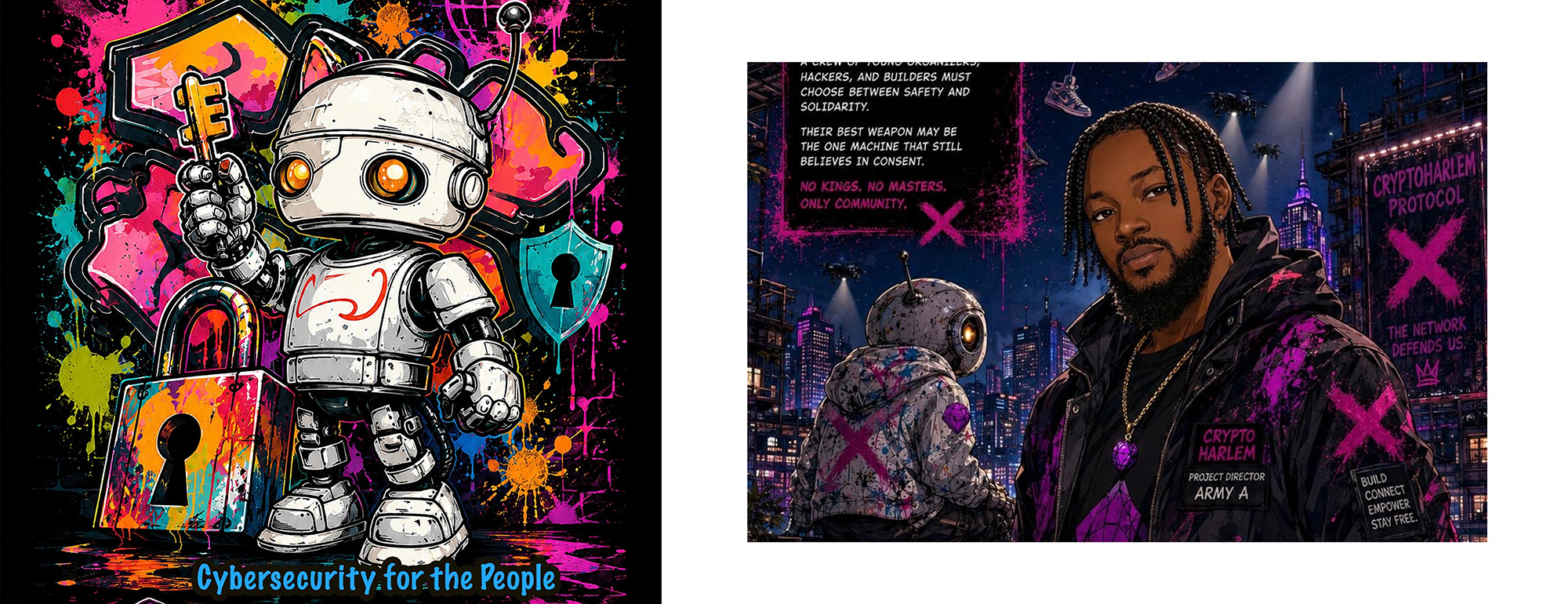
CryptoHarlem: a community-based, bottom-up approach to digital security
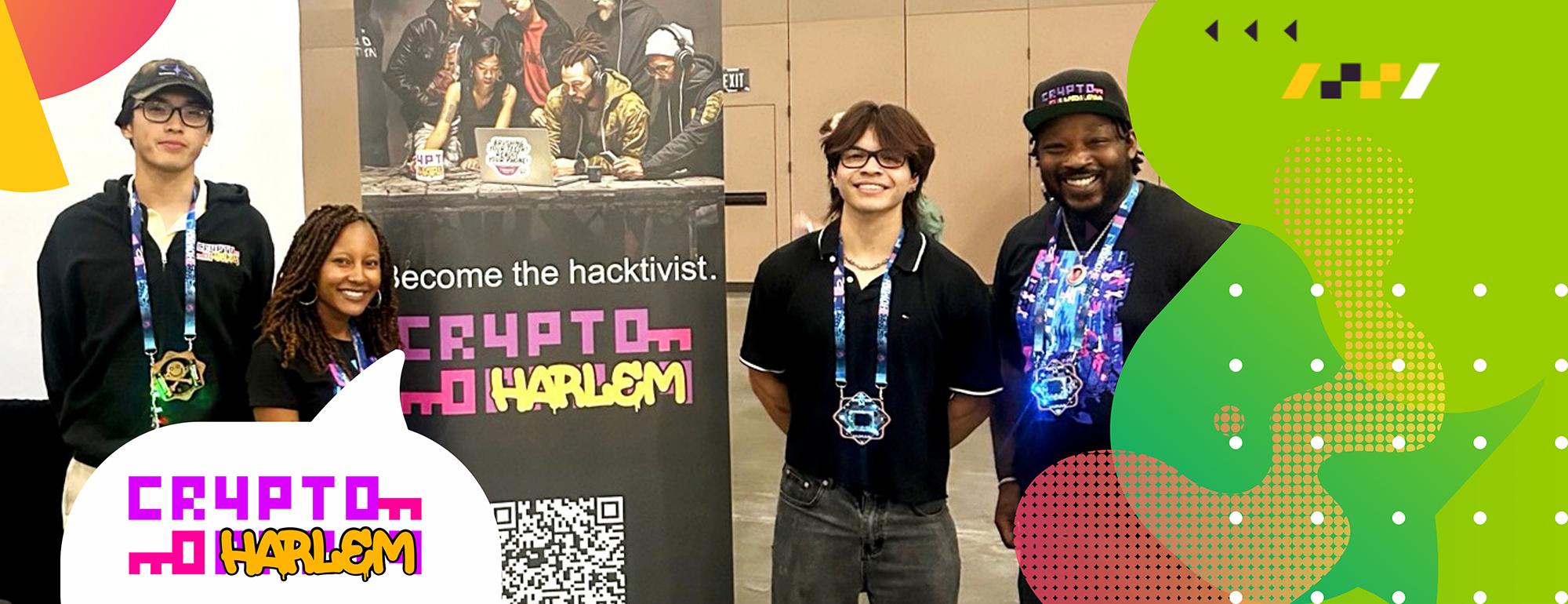
Started in the heart of Harlem of New York City more than a decade ago, CryptoHarlem has been working non-stop to democratize digital privacy and security for communities who have historically been over-surveilled, under-protected, and left out of conversations about technology.
Today, with the power of AI and other emerging technologies, digital threats, such as mass surveillance, online scams, deepfakes, and misinformation, has become remarkably sophisticated and prevalent, harming billions of everyday people. Yet once again, the people most vulnerable to these harms are left with the fewest resources to protect themselves.
Technology is never just about technology. It shapes who has access, who has power, who gets protected, and who gets left behind. More often than not, tech systems are not designed with people who are most impacted in the picture. Throughout a decade, the CryptoHarlem team has seen too many times how numerous communities were disproportionately harmed with no remedy or prevention from future harms. This kept the momentum for the team to never stop fighting.
CryptoHarlem believes digital safety should not be reserved for cybersecurity experts or people who can afford expensive tools. Through community training, technical assistance, livestreams, and popular education, they translate complex technology into knowledge people can actually use. They are doing this with one goal in mind: to give people more control over their data, privacy, and digital lives. They are not only helping individuals, but helping people build communities that can recognize emerging threats, protect one another, and participate safely and fully in an increasingly digital society.
Recently, we interviewed with Army, the Project Director of CryptoHarlem. In the interview below, you can find an illustrated trajectory of their journey and learn more about how to become part of this movement. If you are wondering where to find them or take their free community training, don’t forget to visit their website and subscribe to their regular online livestream. For their latest event updates, the best way is to follow their X and Bluesky.
What are you currently building, researching, organizing, or experimenting with?
Right now, we’re focused on moving digital safety from conversation into practice.
We’re expanding community-based cybersecurity and privacy training that teaches people how to protect their data, accounts, communications, and devices. We’re also providing technical assistance to nonprofits and organizers who face heightened digital risks.
We have been running a livestream series (available on Twitch and YouTube) that brings cybersecurity practitioners, researchers, and advocates directly into conversation with our community, and turns complex topics into practical advice people can adopt easily. In addition, we host a lot hands-on workshops in person. Our recent HOMERUN workshop introduced community members to running open-source AI locally on their own computers, giving people an alternative to handing sensitive information to large platforms.
Through our recent work, we covered a lot of issues around AI-driven misinformation, deepfakes, surveillance, and their impact on civic participation. As we approach the U.S. midterm elections, we’re particularly interested in what we call “voter suppression 2.0:” how emerging technologies can be used to confuse, intimidate, surveil, or disengage communities that have historically faced barriers to political participation.
Across all of this, we’re asking one question: How do we give communities more power over their digital lives?
Who do you hope benefits most from your work? Who is at the heart of the impact of your work?
At the heart of CryptoHarlem are Black, Brown, low-income, justice-impacted, immigrant, LGBTQ+, and other communities that experience disproportionate surveillance and digital harm but are too often an afterthought when technology and cybersecurity solutions are designed.
We also work alongside front-line nonprofits, organizers, and activists who hold sensitive information and regularly face digital threats without having dedicated cybersecurity teams or abundant technology budgets.
The goal isn’t to make everyone a cybersecurity professional. It’s to build literacy for everyday people so they can confidently and comfortably make informed decisions about their privacy, recognize threats, and protect themselves and their communities. Digital safety has become a basic requirement for participating in modern life. Access to such knowledge should not depend on your income, education, or technical background.
What does a genuinely privacy-respecting or ethical technology ecosystem actually require — beyond good intentions?
It requires shifting power. We can’t call technology ethical simply because the people building it have good intentions. We have to ask: Who designed it? Who benefits? Who carries the risk? Who owns the data? And when harm happens, who has the power to do something about it?
A privacy-respecting ecosystem needs stronger protections, accountability from technology companies, investment in public-interest technology, and meaningful participation from communities most impacted by these systems. It also requires funding community organizations that already have trust but are often expected to address increasingly sophisticated technological harms with very limited resources.
Most importantly, privacy has to become accessible. If protecting yourself requires technical expertise, expensive tools, or hours of research, we have not created an equitable system.
For us, democratizing digital privacy means giving people real choices: Understanding what happens to their information, deciding what they share and with whom, and having practical tools to protect themselves when systems fail them.
Can you name one misconception people often have about digital security, privacy, or technological ethics?
One misconception I constantly push back on is that privacy is only for people who “have something to hide.” Privacy isn’t about hiding. It’s about agency. It’s the ability to decide what parts of yourself you share, when you share them, and with whom.
That distinction matters even more for communities that have historically experienced surveillance, profiling, discrimination, or criminalization. A piece of information that feels harmless in one context can create very different consequences in another.
I also think we make cybersecurity sound unnecessarily intimidating. People hear “cybersecurity” and assume they need to understand code or complicated tools. Most people don’t. A few accessible practices, combined with an understanding of how their information moves online, can meaningfully reduce their risk. Our job is to make that knowledge feel possible, not overwhelming.
What tensions or contradictions do you wrestle with in building and developing your work?
The biggest tension is accessibility versus complexity. The threats we’re talking about are complicated. Discussions around surveillance systems, AI, data brokers, phishing, platform algorithms, and digital security can turn technical very quickly. But telling someone everything that could go wrong can leave them feeling more powerless than when they started. Our responsibility is to tell the truth about the risks without creating fear.
We constantly ask: What does someone actually need to know today? What action can they realistically take? How do we make security stronger without making technology harder to use?
There’s also a tension around scale. Demand for this work is growing much faster than the resources available to organizations like ours. We want to reach more people, but trust is central to the CryptoHarlem model. We don’t want growth to come at the expense of being community-rooted, responsive, and human.
For us, success isn’t simply reaching the largest number of people. It’s making sure the knowledge we share is useful enough that people can actually apply it and share it with others.
What feels particularly urgent right now?
The intersection of AI, misinformation, surveillance, and the upcoming U.S. midterm elections feels especially urgent. AI has dramatically lowered the barrier to creating convincing fake images, video, audio, and targeted misinformation. At the same time, communities that have long been facing voter suppression are navigating an information environment where determining what is real is becoming harder. We think of this as an emerging form of voter suppression 2.0. The tools may be new, but the targeted communities are often very familiar.
We cannot wait until after an election—or after harm occurs—to teach people how to recognize these threats. Right now, we’re building partnerships, expanding popular education, and developing community-centered approaches to misinformation and digital safety that can be useful during the midterms and remain valuable long after an election ends.
What keeps you motivated despite the challenges of this work?
The people keep me motivated. Every time someone leaves one of our workshops understanding something they thought was “too technical” for them, I’m reminded why accessibility matters. There is power in watching someone realize they can understand these systems, ask better questions, and make different choices about their digital life.
I’m also motivated by what becomes possible when communities stop being treated only as people who need protection and start being recognized as people who can build solutions and protect one another.
Technology is moving incredibly fast, and there are real concerns at stake. But I don’t believe the future is already decided. We still have an opportunity to shape how these tools affect our communities. That possibility, and the responsibility that comes with it, is what keeps me committed to this work.
What is something people rarely see or understand about the labor behind this kind of work?
People often see the workshop, livestream, tool, or event. They don’t always see the trust-building required before any of that can work.
Community cybersecurity is deeply relational. You’re asking people to talk about surveillance, scams, harassment, compromised accounts, sensitive organizational information, and sometimes experiences that have made them feel unsafe. You can’t simply arrive with a technical solution and expect people to trust you.
Translating technical information without watering it down also takes tremendous effort. We have to understand the threat, understand the technology, and then make both accessible to someone who may have never heard the terminology before.
What is one digital habit or practice you think more people could benefit from when adopted?
Turn on multi-factor authentication for the accounts that matter most, especially your email, banking, and social media, and use a password manager so every account can have a different, strong password. A few consistent habits can dramatically reduce your exposure to everyday threats.
What gives you hope about the future of technology, digital security, and/or privacy?
What gives me hope is that more people are asking better questions. Communities are becoming more aware of what happens to their data, organizers are thinking more intentionally about digital security, and technologists are increasingly challenging the idea that innovation should come at the expense of privacy.
I’m especially hopeful when communities are not just invited to react to technology but given the resources to understand it, experiment with it, and shape how it is used. That’s what we want CryptoHarlem to contribute to: a future where people don’t have to choose between participating in the digital world and protecting themselves. A future where privacy isn’t a luxury product and cybersecurity knowledge isn’t gatekept.
Technology will continue evolving. What gives me hope is knowing we can still change who has the knowledge and power to shape it.
What advice would you give to someone newly entering this field?
Learn the technology, but learn the people too.
It’s easy to enter cybersecurity and become focused on tools, certifications, vulnerabilities, and the newest threat. Those things matter. But security is ultimately about people.
Listen to communities before deciding what they need. Learn how history, race, poverty, surveillance, incarceration, immigration status, and other systems shape someone’s relationship with technology. And practice explaining what you know without making someone feel small for not knowing it.
You don’t have to be the smartest person in the room to make an impact. Be curious. Share what you learn. Stay close to the people affected by the problems you’re trying to solve.
About Army
Army Armstead is the Project Director of CryptoHarlem, where he works to democratize digital privacy and cybersecurity and ensure historically marginalized communities have the knowledge and tools to protect themselves in an increasingly digital world.